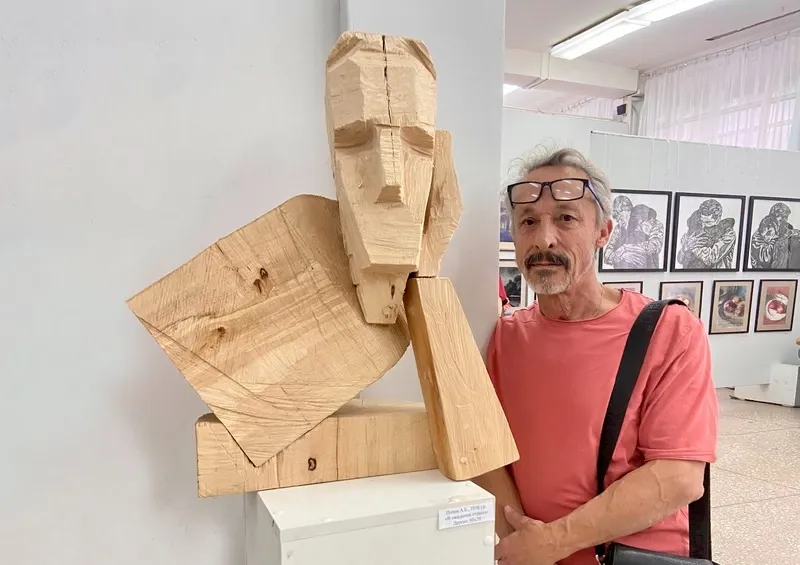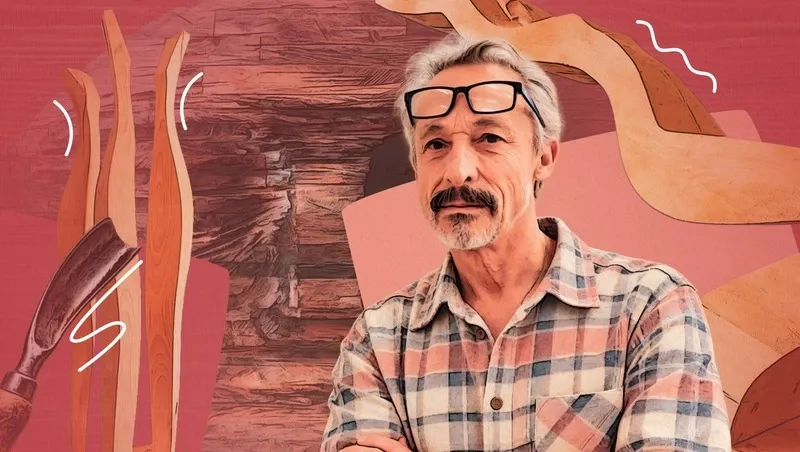
Andrey Popov's personal exhibition gathered works demonstrating the evolution of the sculptor's creativity from academic realism to conceptual symbolic plasticity. The master's main material remains wood, which he values for its malleability and the purity of the processing process. According to the author, working with a chisel helps to free oneself from everyday problems, and each type of wood, whether linden or oak, has its own unique aroma.
At the beginning of his career, the sculptor experimented with painting, hiding the texture of the material, but later discovered ash. This species became key due to its noble texture. A turning point in style came in 1982, when an attempt to transfer a small plasticine figure into a large-scale plaster and oak version led to a loss of expressiveness. The master realized the destructiveness of blind copying and began to refine the form directly during the carving process. Thus, the idea of symbolic sculpture was born, where the sign is more important than literary detail.
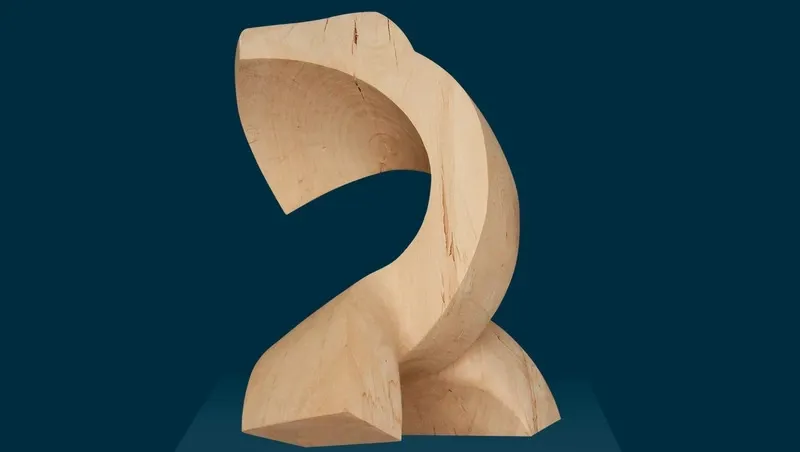
A special place in his work is occupied by church works. Andrey Popov considers the Orthodox canon not a limitation, but a space for absolute freedom, comparable to a 360-degree view. In new works created over the past few years, the sculptor uses spiral forms to add dynamism. However, working with some species, such as the capricious willow, causes difficulties due to hidden wood defects.
Along with his personal creativity, the master passed on experience to a new generation through teaching. For fourteen years, he headed the department of decorative wood processing at the regional college, training specialists in working with historical styles. Among his graduates are well-known authors who continue the traditions of craftsmanship. At the anniversary exhibition, visitors will be able to see new works, including the sculpture "Reed," which has become the calling card of the author's individual style.