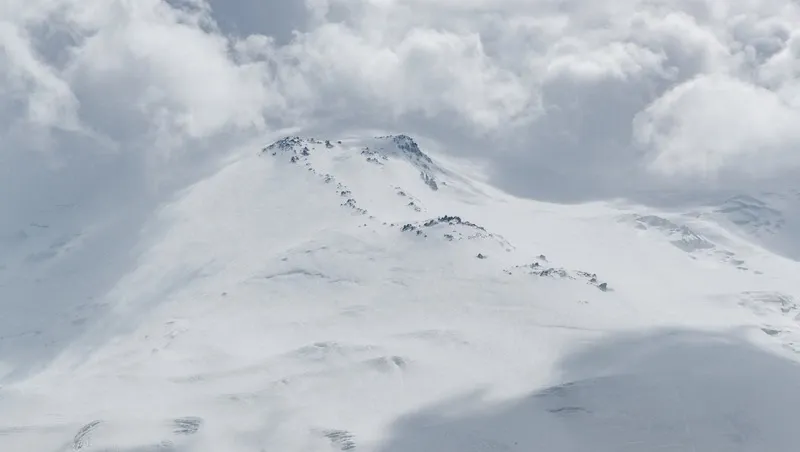
In early September, a massive snow and ice avalanche occurred on the slope of Mijirgi Mountain in the Bezengi Gorge. The glacier covered a group of 33 climbers, resulting in 17 deaths. The remaining expedition members either escaped on their own or were rescued, although six people were injured and hospitalized. This tragedy became the largest mass casualty incident among mountain tourists in Russia in the last quarter of a century.
The First Deputy Head of the Regional EMERCOM Department, Eldar Khashkhodzhev, stated that the main cause was a global restructuring of the climatic zone. Due to warming, the snow line rose, leading to the exposure of individual sections of the glacier mass. The lower part of the ice, which had served as a reliable support for the upper snow blocks for centuries, became weaker and could not withstand the weight of the snow, which triggered the slide.
Tourist safety issues were discussed at a meeting of the Kabardino-Balkaria parliament committee. Committee Chairman Zaur Apshhev noted that tourism is a key industry in the republic's economy. In just the first nine months of this year, the region hosted more than 1.5 million guests, with 60% of them heading to the Elbrus region. The complex search and rescue operation took almost a week. Up to 70 specialists participated, working at an altitude of about three thousand meters in harsh ice and rock terrain conditions. Several new avalanches occurred during the search, but thanks to the professionalism of the rescuers, none of them were injured.
Similar disasters have happened in Bezengi before. The most famous one occurred in 1976, when a group from Grozny died on Pushkin Peak. In more recent history, the tragedy repeated in 2018, when four Rosgvardiya climbers died on the Mijirgi glacier. Experts note that climate anomalies make the mountain terrain unpredictable even for experienced athletes.
Travelers planning trips to high altitudes should consider the growing risks. The snow cover is changing its structure, and familiar routes may become dangerous without additional monitoring of the situation. Before climbing, it is necessary to check current EMERCOM warnings and choose only trusted guides who monitor glacier conditions in real time.