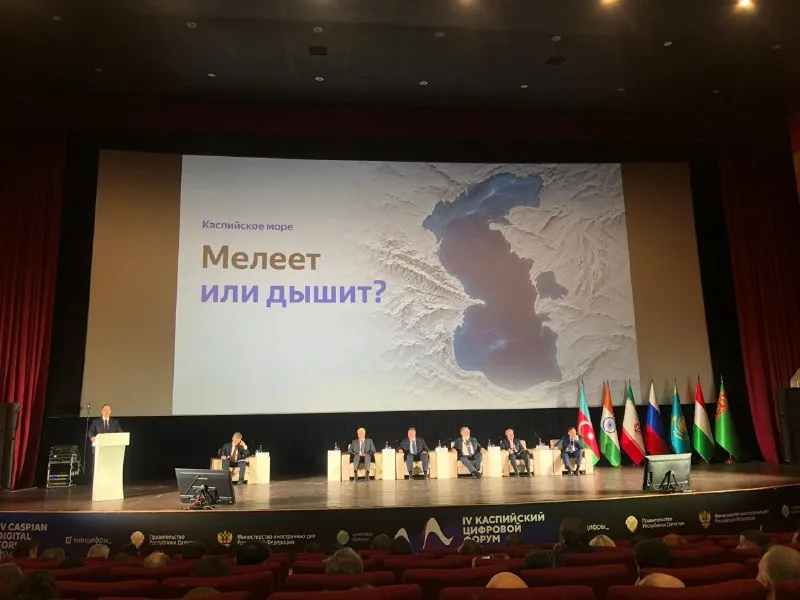
Alexey Fedotov, Director of Business Development at Yandex, announced that the company is developing a scientific and digital twin of the sea. The project combines the efforts of the tech giant, scientific researchers, and artificial intelligence technologies. The main goal is to obtain a detailed picture of changes in the water body's condition with annual precision.
Special attention is being paid to understanding the nature of the current shallowing. Scientists are trying to determine whether the drop in water levels is an irreversible process or part of a natural cycle where the sea periodically becomes shallower and then refills. Researchers from Kazakhstan have already conducted ten expeditions, collecting important data on water composition, bottom sediments, and the state of the ecosystem. These materials form the basis for the digital model.
The problem of shallowing is particularly acute in the northern part of the Caspian Sea, where shallow depths make the coastline vulnerable. Lower water levels complicate navigation, increase port costs, and threaten the habitat of the Caspian seal. For Russia, Azerbaijan, Kazakhstan, Iran, and Turkmenistan, this is a matter not only of ecology but also of economic planning. Russian President Vladimir Putin previously initiated the creation of a digital twin, emphasizing its importance for the development of maritime transport, including along the "North-South" corridor.
Creating an accurate picture requires comprehensive observations. Since the Caspian Sea borders five countries, the success of the project depends on the exchange of hydrological and environmental data. The initiative could become the foundation for a new format of cooperation among Caspian nations, where environmental tasks are directly linked to economic interests.
This information is important for travelers, as water levels affect the infrastructure of coastal resorts and the accessibility of beaches. Monitoring the state of the sea will help better plan vacations in coastal zones. It is worth noting that climate change and natural cycles may affect the comfort of staying by the water in the long term.